Seasonal Events Reshaping Reward Accumulation in Cross-State Online Table Platforms
Sam Wagner · Oct 20, 2026
Seasonal Events Reshaping Reward Accumulation in Cross-State Online Table Platforms
Seasonal festivals have begun influencing how bonus points accumulate in digital table networks that operate across several states, with operators adjusting accrual formulas to align with events such as harvest celebrations, winter holidays, and regional carnivals. These adjustments appear in blackjack, roulette, and poker rooms hosted on platforms licensed in jurisdictions including New Jersey, Pennsylvania, and Michigan, where regulators permit promotional structures that vary by calendar period. Data from the New Jersey Division of Gaming Enforcement shows increased point multipliers applied during October through December windows in 2025, a pattern observers expect to continue into October 2026 when similar festivals recur.
Mechanics Behind Festival-Linked Accrual Changes
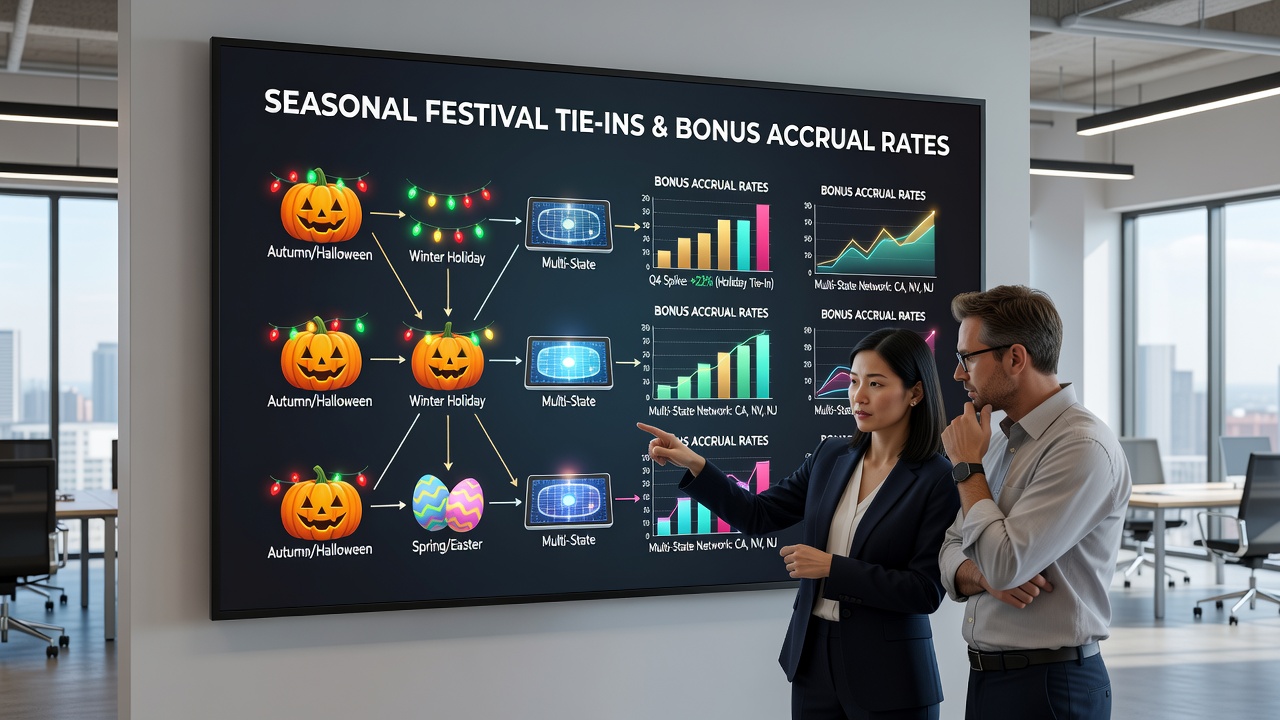
Operators link bonus accrual rates to festival calendars by raising the points earned per dollar wagered on table games during designated weeks, then tapering those rates once the event concludes. A typical structure multiplies base accrual by 1.5 during the first two weeks of a harvest festival and reduces it to 0.8 afterward, creating a surge-and-stabilize cycle that platform analytics track across state lines. Researchers at the University of Nevada, Las Vegas documented similar patterns in 2024 reports, noting that multi-state networks synchronize these multipliers through centralized loyalty engines while still complying with each jurisdiction's separate tax and reporting rules.
Table game players receive notifications inside the app that detail the temporary rate shift, and the system automatically applies the new formula once the festival window opens. This automation reduces manual overrides yet requires each participating state's compliance team to review the updated terms before launch. Figures from the American Gaming Association reveal that networks covering three or more states implemented an average of four such seasonal adjustments per year between 2023 and 2025.
State-Specific Regulatory Responses
Regulators in different states have responded with varying levels of oversight. Michigan's Gaming Control Board requires advance submission of any accrual multiplier exceeding 2.0, while Pennsylvania's gaming commission focuses on ensuring that post-festival reductions do not drop below the standard rate established at license issuance. These differences force network operators to maintain separate rule sets within a single backend system, a technical requirement confirmed in filings submitted to the respective boards during 2025 renewal cycles.

One network operating across the three states adjusted its poker room accrual during a late-October event by increasing points per hand from 0.5 to 0.75 for the duration of the festival, then returning to baseline the following week. Compliance records indicate that each state's audit team reviewed the change logs independently, with no cross-state discrepancies reported. Observers note that such segmented oversight preserves local control even as the underlying software remains unified.
Player Behavior Patterns During Adjusted Periods
Transaction data collected by platform providers indicates that table game volume rises during the elevated accrual windows, particularly in the first three days after the multiplier activates. Players shift from slot-focused sessions to table play when the point rate increases, a movement tracked through session-length metrics that the networks share with regulatory analysts. The pattern repeats across festival cycles, with the sharpest uptick occurring around regional harvest events that coincide with state fair schedules.
Networks have begun publishing aggregated, anonymized summaries of these shifts on their public dashboards, allowing third-party analysts to compare accrual elasticity across jurisdictions. A 2025 study released by the Canadian Centre on Substance Use and Addiction examined parallel data from provinces with similar multi-site digital table offerings and reached comparable conclusions about festival-driven volume spikes.
Technical Infrastructure Supporting Rate Adjustments
Backend systems rely on geofenced rule engines that apply the correct multiplier based on the player's registered state at the moment of play. When a user crosses state lines mid-session, the engine recalculates any in-progress bonus accrual using the new jurisdiction's active rate, a process that occurs without interrupting the game. Developers at major platform vendors confirmed this capability in technical briefings delivered to state regulators throughout 2025.
Database schemas store festival calendars as separate tables linked to each state's regulatory identifier, allowing quick updates when new events receive approval. This architecture supports the rapid deployment of October 2026 adjustments while maintaining audit trails required by every participating gaming board.
Conclusion
Seasonal festival tie-ins continue to influence bonus accrual formulas within multi-state digital table networks through structured multipliers, state-specific compliance reviews, and automated infrastructure that tracks player activity across jurisdictions. The approach has produced measurable volume shifts during event windows, with regulatory filings and academic analyses documenting the patterns that emerged between 2023 and 2025. As October 2026 approaches, the same networks are preparing updated calendars that align with recurring regional celebrations while preserving each state's distinct oversight requirements.